Should You Use Your Laptop Outside in The Sun Circuit Diagram Creating a model of the thermal runaway process is complex as it covers a large number of subject areas. Detecting the first vent which is the early release of electrolyte vapor may enable early detection and prevention of thermal runaway. Battery cell abuse may create an increase in the internal temperature of a lithium-ion cell, leading to the breakdown of organic electrolyte solvents.
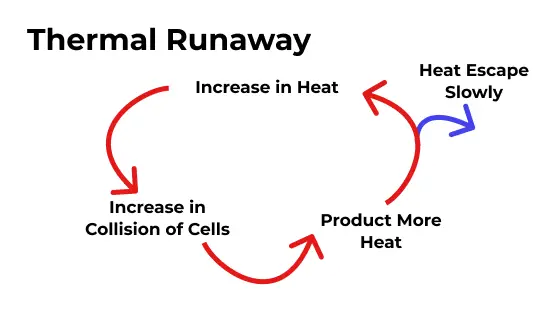
This study compares various monitoring, warning, and protection techniques, summarizes the current safety warning techniques for thermal runaway of lithium-ion batteries, and combines the knowledge related to thermal runaway. It also analyzes and forecasts the future trends of battery thermal runaway monitoring, warning, and protection.

Early Detection & Prevention of Thermal Runaway Circuit Diagram
This post presents an example of the Thermal Runaway Modeling and Calibration of an LFP Battery Cell using the ARC device, the HWS test protocol and Simcenter Amesim. An abuse test is the most direct way to challenge the thermal stability limits of a Li-ion cell and characterize the thermal runaway phenomena.
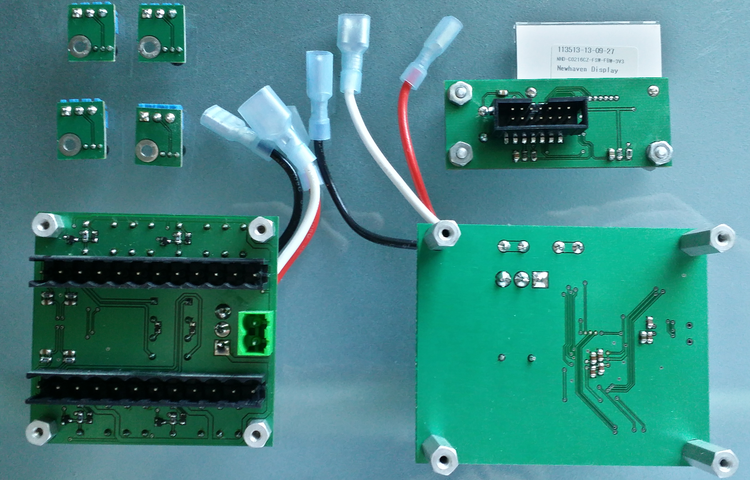
Therefore, monitoring and detecting the incipient-stage thermal runaway by measuring or estimating these characteristic signals, such as the voltage, the temperature, and the gas component, is one of the most effective methods to promote the safety of lithium-ion batteries in different application scenarios. Here, we report a flexible sensor array with fast and reversible temperature switching that can be incorporated inside batteries to prevent thermal runaway. This flexible sensor array consists of PTCR ceramic sensors combined with printed PI sheets for electrodes and circuits. Webinar Overview Thermal runaway in electric vehicle (EV) batteries poses a significant risk. But what triggers it, and how can it be detected and prevented? This webinar will explore the underlying science of thermal runaway, examining the root causes of battery fires and the methods used to predict and detect thermal runaway events.

Emerging sensor technologies and physics Circuit Diagram
Early detection of thermal runaway in battery packs to prevent propagation, using graphite sheets and sensors positioned near cell vents. The graphite has high in-plane thermal conductivity but low through-plane conductivity, so it absorbs and conducts away heat from a venting cell to stop runaway propagation.